
Why are my teeth shifting?

Bad news for everyone with straight teeth: teeth can shift at any time, even in adulthood. Teeth like to move, and how strongly they tend to do so varies from person to person. If a new gap appears or a tooth becomes crooked, quick action is needed to detect and correct the misalignment as early as possible and avoid another lengthy, complex treatment.
Teeth shifting with age
In young adulthood in particular, teeth often still shift, rotate or overlap. These changes usually affect the front teeth. But even later in life, straight teeth can shift again (and further). As we get older, teeth often shift more quickly, so you should definitely not hesitate. Any hygiene problems caused by crooked teeth should be avoided at all costs. With crooked teeth, it is of course much harder to clean the spaces between them with a toothbrush and dental floss. This increases the risk of plaque, tooth decay, bad breath and even periodontitis.
Teeth moving back after orthodontic treatment
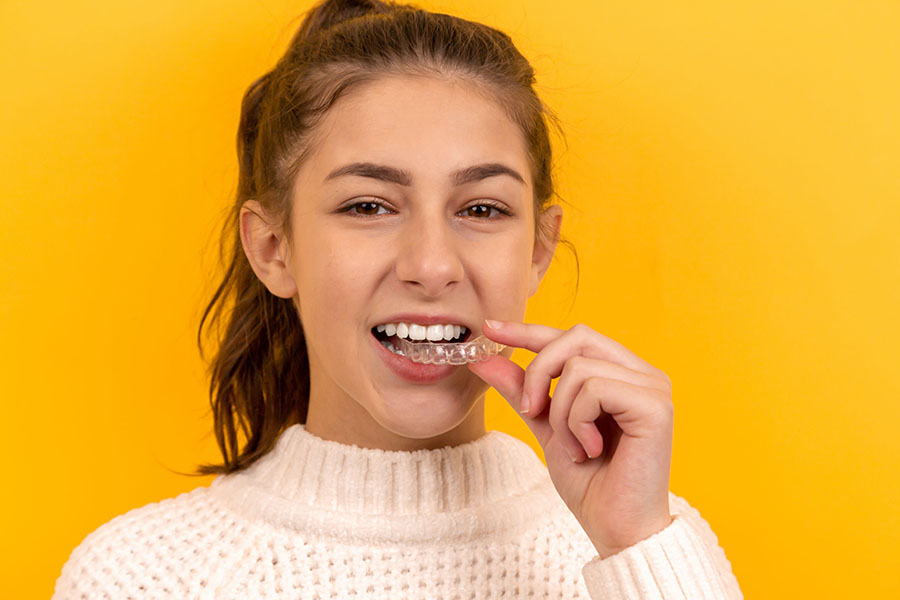
Unfortunately, our teeth are creatures of habit and like to return to their crooked starting position, even after successful orthodontic treatment. The more crooked the teeth were before correction, the more likely they are to shift or rotate again. Jaw growth can also trigger tooth movement. The muscles of the jaw and face can have a strong influence on the position of the teeth. (e.g. tongue thrusting, an open-mouth posture, …)
Perfect orthodontic treatment and retention
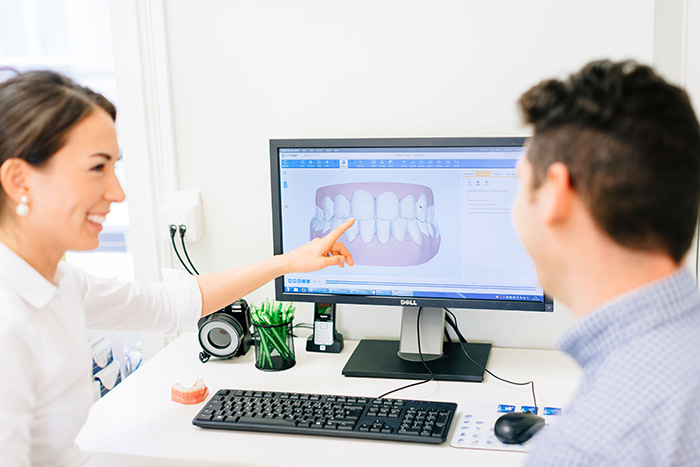
The most straightforward way to straight teeth is invisible braces. Adults in particular prefer this method, as conventional fixed braces often bring back memories of their teenage years. No metal brackets at all, and no embarrassed hand in front of your mouth every time you smile. Invisible braces are completely transparent and don’t restrict the patient’s quality of life. What’s more, they aren’t fixed to the teeth but can simply be taken out when needed – for example when eating and, above all, for daily oral hygiene.
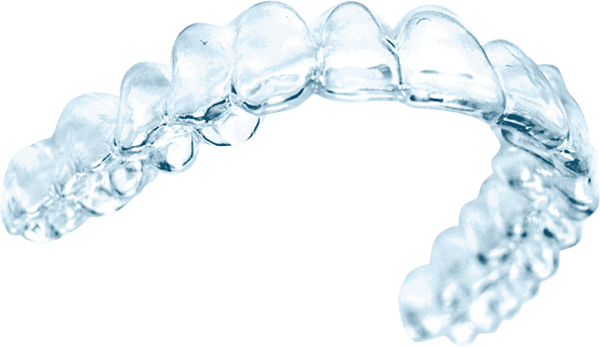
After successful orthodontic treatment, retention is particularly important. It effectively prevents the teeth from shifting again and ensures the results of treatment last. Patients can choose between an extra-thin metal wire attached to the inside of the teeth or a night-time retainer.
You might also be interested in:
- The perfect food for braces wearers
- Clear aligners: 4 things you should know!
- These braces are perfect for teenagers
- Which braces are right for me?
- Invisible braces for children
- When orthodontic treatment with clear aligners makes sense
- How to get naturally white teeth
- When do braces make sense?
- What can I eat and drink with invisible aligners?
- What pain during orthodontic treatment means
- 5 tips for a radiant smile
- How long orthodontic treatment with invisible aligners takes
- Why do teeth hurt in the cold?
- Why celebrities wear invisible braces
- Invisible braces: fact or fiction? Common claims put to the test
- Study: straight teeth & their positive effect on health
- Which types of misaligned teeth can invisible aligners correct?
- Summer snacks for your braces: the good, the bad – and the alternatives
- Bad breath: causes and treatment
- Electric or manual toothbrush: which cleans your braces better?
- Braces: when is the right time for orthodontic treatment?
- Easing dental anxiety: what really helps and why our braces don’t hurt
- Which foods strengthen your teeth and braces?
- Free braces for children
- Braces for adults: what you’ve always wanted to know
- 4 tooth-friendly on-the-go snacks for you and your braces
- Braces at 50: what you should know
- Invisible aligners: a positive effect on dental and oral health
- The best tips for caring for your teeth with braces
- Cost of braces: it depends on the type
- Wedding: how to prepare your smile for the big day
- What really causes tooth decay?
- Can I do sport with clear aligners?
- 5 myths about root canal treatment
- Teeth straightening and orthodontics: answers to the most common questions
- Teeth straightening in orthodontics
- 5 reasons why braces make sense for adults
- Periodontitis – getting gum disease under control
- What does the dentist say about xylitol – a healthy sugar alternative for your mouth?
- Why you should wear a retainer after braces
- Dental floss: facts and myths
- The best oral hygiene tips for healthy, white teeth
- What are the advantages of invisible braces?